




How Do I Know If My Reactive Dog Is Getting Better?

Updated: Aug 28

How Do I Know If My Reactive Dog Is Getting Better?
The Field Lesson
The Shake
Measure the Return, Not the Storm
Something frightens your dog.
The body reacts.
A bark.
A lunge.
A startle.
A retreat.
Perhaps a full-body shake afterward.
We tend to watch the storm.
How big was the reaction?
How loud was the bark?
How far did the dog lunge?
Did it happen again?
And when the reaction is still large, we assume nothing is changing.
But there is another measurement hiding in plain sight.
How long did it take your dog to come back?
Recovery is the journey from activation back toward ordinary.
The dog may still react today.
But perhaps yesterday it took fifteen minutes before the body softened again.
Today it took eight.
Next week it may take three.
The storm may look similar while something underneath it is already changing.
That matters.
Because the goal is not to create a dog who never experiences fear, excitement, frustration, or uncertainty.
Living nervous systems respond to the world.
The deeper question is:
Can the dog find the way home again?
Watch what happens after the difficult moment.
Does the breathing begin to slow?
Does the body soften?
Can the dog look away?
Can curiosity return?
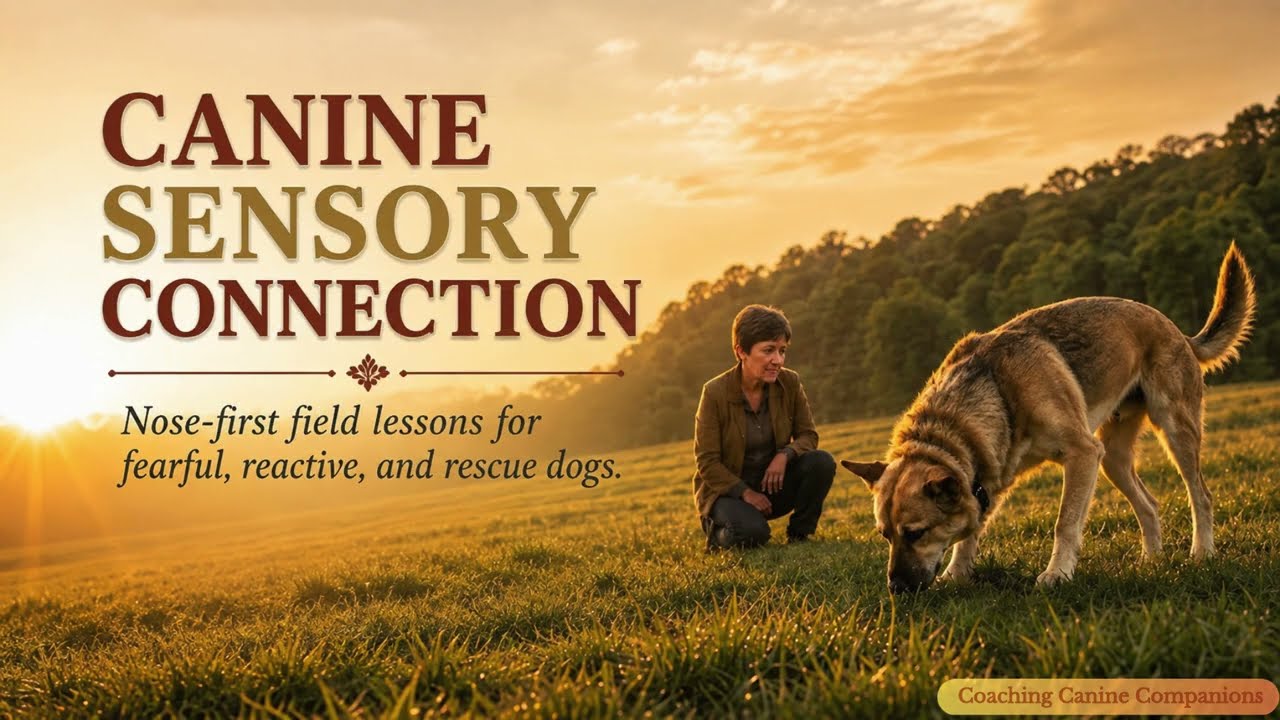
Can the nose return to the ground?
Can the dog take in information from the environment again?
Those are not insignificant details.
They are evidence of recovery.
And recovery can be measured.
❧
A Small Experiment
The next time your dog reacts to something, resist the temptation to judge the entire experience by the reaction.
Instead, notice when the reaction begins.
Then watch quietly for the return.
When does the breathing change?
When does the body soften?
When does the dog begin sniffing again?
When does curiosity return?
Write down approximately how long that journey took.
Do it again another day.
You are no longer asking only:
“Did my dog react?”
You are asking:
“How did my dog recover?”
That is a very different measure of progress.
❧
A dog does not need a life without storms.
A dog needs an increasingly familiar road home.
Canine Sensory Connection teaches guardians to notice that road — and uses scent, curiosity, observation, and meaningful searching to help dogs practice finding it.
We did not win the walk. We came home to each other.
Help your dog practice the road home.
Canine Sensory Connection uses scent, curiosity, observation and meaningful searching to help you recognize recovery — and give your dog opportunities to practice finding their way back.
Explore the Canine Sensory Connection Workshop
Force-free throughout. Veterinary care first, always.
Lorrie J. Harris · Coaching Canine Companions · North Kingstown, Rhode Island

Comments