




The Walk Was Never the Beginning ~ Why Is My Dog Reactive on Walks?

Updated: Aug 23
The Field Lesson
There is a place where your dog’s struggle becomes visible.
The corner.
The gate.
The barking dog behind the fence.
The bicycle appearing from nowhere.
That is where the leash tightens. The barking begins. The body surges forward. And because that is where the problem becomes loud, it is naturally where we try to solve it.
But the walk was never the beginning.
There are twenty-four hours in your dog’s day. The difficult moment on the street may occupy only one of them.
The other twenty-three matter.
What happened before the leash came off the hook?
Was your dog deeply rested or quietly vigilant?
What happened in your own body as you prepared to leave?
Did your breathing change?
Did your shoulders tighten?
Did your hand close around the leash before anything frightening had even appeared?
And what opportunities did your dog have during the rest of the day to use the parts of themselves that the modern world so often asks them to suppress?
A walk can tire a dog’s muscles.
A search can finish something much older.
Dogs were built to investigate. To follow scent. To search. To make choices. To solve problems through information carried in the world around them.
The dog who becomes intensely alert at the fence does not necessarily have broken machinery.
The machinery may be working beautifully.
It may simply be unemployed.
Scent work gives some of that ancient machinery an honest job.
And something else happens while the dog searches.
The guardian becomes quieter.
Instead of constantly telling the dog what to do, the guardian begins watching.
How does curiosity begin?
What does concentration look like?
What happens when the dog becomes uncertain?
What does recovery look like?
What does the dog’s body look like when a problem has been completed and the nervous system begins to settle?
These small observations begin teaching the guardian to recognize the dog before behavior becomes loud.
• • •
Why is my dog reactive on walks?
A Small Experiment
Before trying to change your next difficult walk, spend two quiet minutes observing your dog somewhere safe and ordinary.
Ask for nothing.
Correct nothing.
Simply watch.
Notice the breathing.
Notice where the dog’s weight rests.
Notice the eyes.
Notice the first moment curiosity appears.
And notice what genuine settling looks like afterward.
You are beginning to learn the dog who will eventually arrive at the end of that leash.
• • •
The walk may be where the struggle appears.
It is rarely where the story begins.
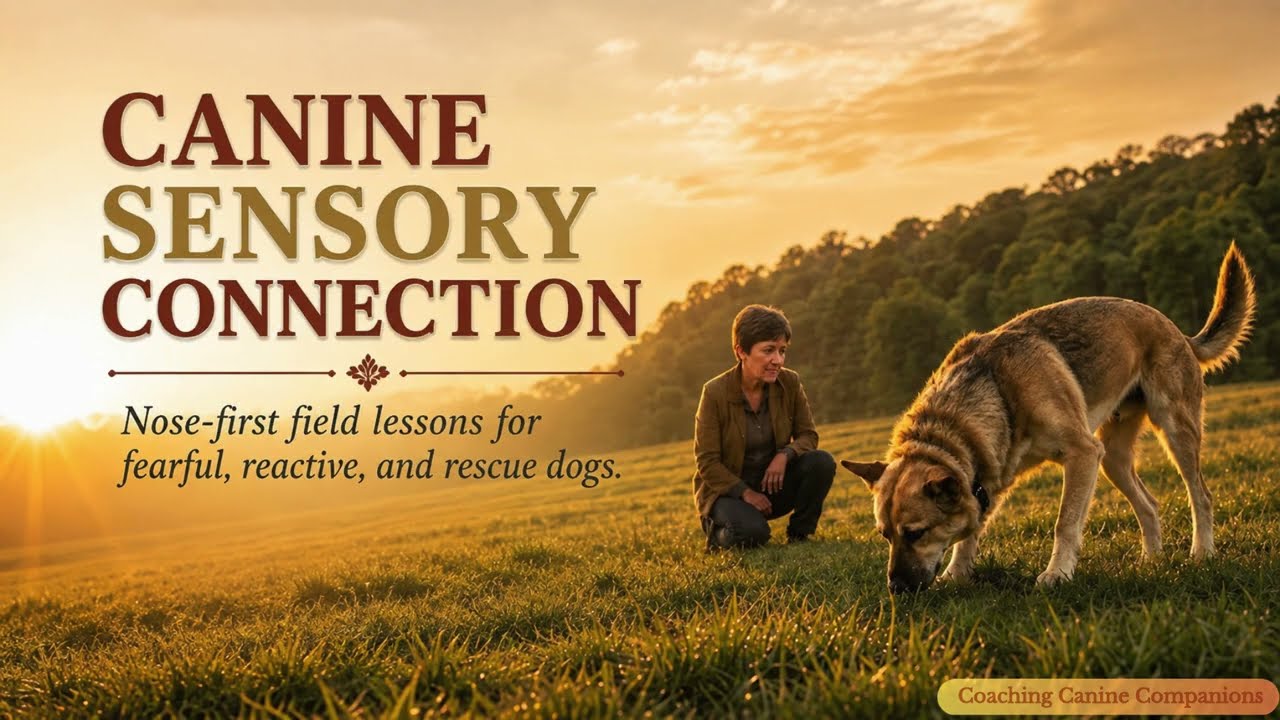
The Canine Sensory Connection Method explores how scent, curiosity, observation, recovery, and meaningful instinctive work can change what happens long before you reach the difficult corner.
• • •
When You Want the Field Work
Take this into the field.
Learn how scent, curiosity, observation, agency and recovery can help you begin working with your dog before you reach the difficult corner.
P.S. — Night Two is “The Face They Call Guilty.” It arrives next.

Comments